
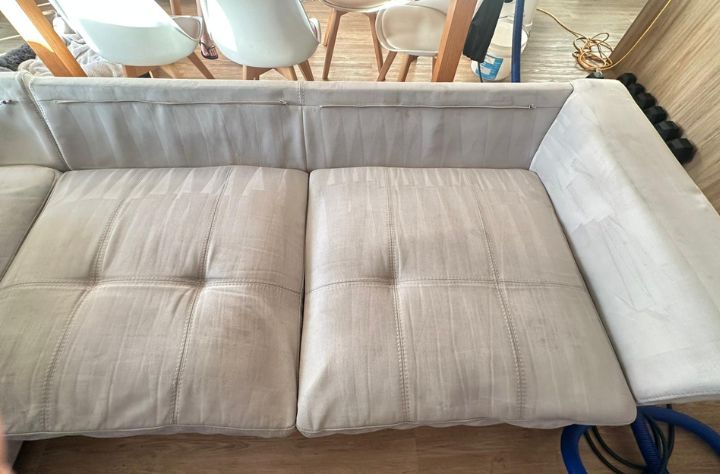
Pet odors in upholstery are a common challenge for pet owners. Even well-trained pets leave behind dander, oils, and the occasional accident. These organic materials break down over time and create odors that can be difficult to eliminate.
Professional couch cleaning can remove pet odors effectively, but the degree of success depends on several factors including the type of odor, how deeply it has penetrated, and the cleaning method used.
Why Pet Odors Linger
Pet odors are caused by organic compounds. Urine contains uric acid, which crystallizes and bonds to fabric fibers. Bacteria break down urine and feces, producing ammonia and other smelly compounds. Pet dander and oils also accumulate and contribute to odor over time.
Regular vacuuming removes surface dander and hair, but it does not address the compounds that cause odors below the surface. These compounds can remain active for years if not properly treated.
How Professional Cleaning Removes Pet Odors
Professional cleaning addresses pet odors through several mechanisms.
Physical Removal
Hot water extraction physically removes urine crystals, dander, bacteria, and oils from the fabric. The cleaning solution surrounds these particles, and the vacuum extraction pulls them away. This is the most important step because it removes the source of the odor rather than just masking it.
Enzymatic Treatment
Enzymatic cleaners contain proteins that break down uric acid and other organic compounds found in pet urine. These enzymes digest the odor-causing material, converting it into harmless byproducts that can be rinsed away.
Enzymatic cleaners require time to work. The solution must remain on the stain for a specified period, often 10 to 15 minutes, to allow the enzymes to break down the compounds fully.
Deodorization
Some professional cleaning services use deodorizing agents after cleaning. These products neutralize remaining odor molecules rather than covering them with fragrance. Ozone treatment is another option for persistent odors, though it requires the room to be empty during treatment.
Sanitization
The high water temperature used in professional steam cleaning kills many bacteria that contribute to odors. This sanitization effect reduces the biological activity that causes smell.
Factors That Affect Odor Removal
Fresh vs Old Odors
Fresh urine or accident odors are much easier to remove than old, set-in odors. If the odor has been present for weeks or months, the uric acid crystals have had time to bond firmly with the fabric and may have soaked into the cushion foam.
Surface Only vs Deep Penetration
Urine that remains on the fabric surface is relatively easy to clean. However, liquid urine can soak through the fabric into the cushion padding. If the cushion foam is contaminated, surface cleaning will not fully remove the odor. The foam may need to be replaced in severe cases.
Fabric Type
| Fabric Type | Odor Removal Potential |
|---|---|
| Synthetic (polyester, microfiber) | Good, less absorbent, easier to clean |
| Natural (cotton, linen) | Moderate, more absorbent, harder to clean |
| Thick fabrics (velvet, chenille) | Challenging, holds onto odors |
| Leather | Good, non-porous surface, easy to clean |
Number of Incidents
A single accident is easier to treat than repeated urination in the same area. Multiple incidents mean more buildup and deeper penetration.
Professional Odor Removal Process
Assessment
The technician identifies the affected areas and determines how deep the odor has penetrated. They may use a UV light to locate urine spots that are not visible to the naked eye.
Pre-Treatment
An enzymatic cleaner or specialized odor treatment is applied to the affected areas. The solution is allowed to dwell for the recommended time.
Cleaning
The entire couch is cleaned using hot water extraction. This removes the treatment along with dissolved odor compounds.
Extraction
Powerful vacuum extraction pulls the solution and contaminants from the fabric. Multiple passes may be needed in heavily affected areas.
Drying and Evaluation
After drying, the technician checks whether the odor has been eliminated. In some cases, a second treatment may be needed.
Can All Pet Odors Be Removed?
While professional cleaning is effective for most pet odors, there are situations where complete removal is not possible.
Urine that has soaked into cushion foam. If the liquid has penetrated through the fabric and into the foam padding, cleaning the fabric alone will not remove the odor. The foam will continue to release smell as it heats up from body heat or humidity. In these cases, replacing the affected cushions may be necessary.
Odors in the sofa frame. If urine has soaked into the wooden frame, it can cause persistent odors that are very difficult to eliminate.
Multiple old stains. A sofa with years of accumulated pet accidents may have odor sources throughout the padding and frame. Complete removal may not be realistic.
Underlying mold or mildew. If moisture from accidents has caused mold or mildew growth in the cushion foam, cleaning alone may not be sufficient. Mold remediation may be required.
What You Can Do Before Professional Cleaning
Blot fresh accidents immediately. The faster you remove liquid, the less it penetrates.
Do not use steam cleaners on pet urine. Heat sets the proteins in urine and can make stains and odors permanent.
Avoid ammonia-based cleaners. Ammonia smells similar to urine to pets, which may encourage them to re-mark the area.
Do not saturate the area. Using too much liquid can push urine deeper into the padding.
Maintaining a Fresh-Smelling Couch
After professional cleaning, these habits help prevent odors from returning.
Vacuum the couch weekly, including crevices and under cushions.
Use a pet-friendly upholstery protector spray to create a barrier against spills.
Clean accidents immediately with an enzymatic cleaner.
Keep pets off the couch with training or use washable covers.
Groom pets regularly to reduce dander and loose hair.
Air out the room regularly to prevent moisture buildup.
When to Consider Cushion Replacement
If professional cleaning does not fully remove the odor, the cushion foam may be contaminated. Signs that foam replacement is needed:
- Odor returns shortly after cleaning.
- The smell is stronger when someone sits on the couch (body heat activates odor).
- Visible discoloration on the foam when the cushion cover is removed.
- The couch has had repeated pet accidents over a long period.
Many upholstery cleaning companies offer cushion foam replacement or can recommend a service provider.
Comparison of Odor Removal Methods
| Method | Effectiveness | Best For |
|---|---|---|
| Hot water extraction alone | Moderate | Light odors, surface contamination |
| Enzymatic treatment + extraction | High | Fresh to moderate urine odors |
| Ozone treatment | High (temporary removal) | Persistent odors, requires empty room |
| Foam replacement | Very high | Deeply contaminated cushions |
| DIY sprays and deodorizers | Low | Masking odors temporarily |
Frequently Asked Questions
Does professional cleaning guarantee pet odor removal?
No reputable cleaner will guarantee complete odor removal. Factors such as contamination depth, fabric type, and incident history affect the outcome. Professional cleaning offers the best chance of removal, but some situations require additional steps like cushion replacement.
Will my couch smell like chemicals after cleaning?
Professional cleaning solutions are formulated to rinse cleanly. After proper extraction and drying, there should be no strong chemical smell. If you notice a lingering scent, it may indicate that the cleaning solution was not fully extracted.
Can I use baking soda to remove pet odors before professional cleaning?
Baking soda can absorb surface odors. Sprinkle it on the dry fabric, let it sit for several hours, then vacuum thoroughly. This is a temporary measure and does not replace professional cleaning for embedded odors.
How long does it take for enzymatic cleaners to work?
Most enzymatic cleaners require 10 to 15 minutes of dwell time to break down uric acid. Some products recommend longer contact times for heavy odors. Follow the product instructions for best results.
Is it worth cleaning a couch with pet odors or should I replace it?
Professional cleaning is worth trying first. It costs much less than a new couch and resolves most odor problems. If cleaning does not work, cushion replacement is an intermediate option before replacing the entire couch.
Conclusion
Professional couch cleaning can remove pet odors effectively in most cases. The combination of hot water extraction, enzymatic treatment, and strong vacuum removal addresses both the source and the residue of odors.
Success depends on factors such as how fresh the odor is, how deeply it has penetrated, and the type of fabric. Fresh odors and surface-level contamination respond well to cleaning. Old, deep-set odors in cushion foam may require additional measures like foam replacement.
For pet owners, regular cleaning and prompt accident treatment are the best ways to keep furniture fresh and odor-free between professional appointments.