
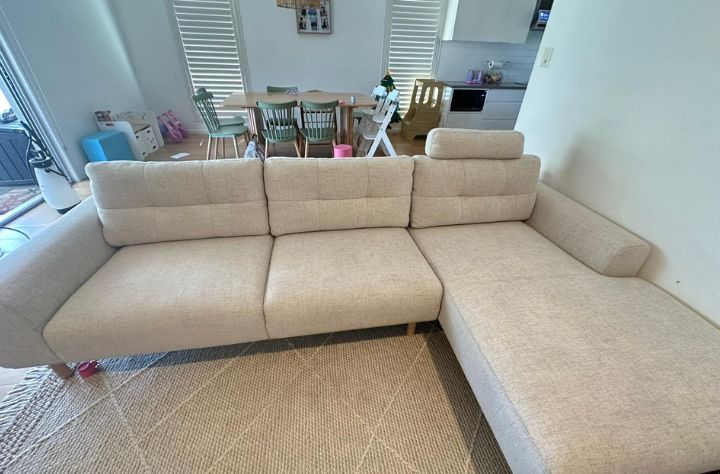
If you are planning to have your couch cleaned, one of the first questions you probably have is how long it will take. The answer depends on several factors including the size of the couch, the cleaning method, the level of soiling, and the drying time.
This article breaks down the time involved in each stage of the process so you can plan accordingly.
The Active Cleaning Time
The hands-on cleaning portion of the appointment is usually the shortest part of the overall process.
| Couch Size | Typical Cleaning Time |
|---|---|
| Loveseat | 20 to 40 minutes |
| Three-seater sofa | 30 to 60 minutes |
| Large sectional | 60 to 120 minutes |
| Chaise or recliner | 15 to 30 minutes |
These times cover the actual cleaning work including pre-treatment, agitation, extraction, and grooming. They do not include setup, inspection, or drying.
Factors That Affect Cleaning Time
Size and Configuration
A standard three-seater sofa takes less time than a large sectional with multiple pieces. Couches with many cushions, removable backs, or complicated configurations take longer because each component must be cleaned individually.
Level of Soiling
Lightly soiled furniture cleans faster than heavily soiled pieces. Heavy soiling may require additional pre-treatment passes or extra time agitating the cleaning solution into the fabric.
Number and Type of Stains
If specific stains need individual attention, the technician will spend additional time applying spotting agents and working on each stain. Some stains require multiple treatments.
Fabric Type
Some fabrics absorb cleaning solution more readily, while others resist it. Delicate fabrics require gentler handling and slower cleaning speeds. Heavily textured fabrics may need more agitation to loosen dirt.
Cleaning Method
Hot water extraction takes longer than low-moisture cleaning because it involves injecting and extracting water. Low-moisture methods are faster but may not clean as deeply.
Furniture Accessibility
If the couch is against a wall, surrounded by other furniture, or difficult to access, the technician may need extra time to set up and maneuver equipment.
The Full Timeline From Start to Finish
Understanding the complete timeline helps you plan your day.
Before the Appointment
Preparation (5 to 15 minutes). You may need to clear the area around the couch, remove cushions, and vacuum loose debris.
During the Appointment
Inspection (5 to 10 minutes). The technician inspects the fabric, checks cleaning codes, and identifies problem areas.
Setup (5 to 10 minutes). Equipment is brought in, filled with water and solution, and prepared for use.
Cleaning (30 to 120 minutes). The actual cleaning process as described above.
Final inspection (5 minutes). The technician reviews the results with you.
After the Appointment
Drying (2 to 6 hours). This is usually the longest waiting period. The couch remains damp and should not be used until fully dry.
Drying Time in Detail
Drying time is the part that most people underestimate. The couch may look dry on the surface but still be damp underneath.
| Condition | Typical Drying Time |
|---|---|
| Professional extraction, good airflow | 2 to 3 hours |
| Professional extraction, normal conditions | 4 to 6 hours |
| DIY cleaning, normal conditions | 12 to 24 hours |
| High humidity or poor ventilation | 24 hours or more |
Factors That Affect Drying Time
Extraction quality. Professional machines remove more moisture, leading to faster drying. DIY machines leave more water behind.
Fabric type. Thick fabrics like velvet or chenille hold more moisture and take longer to dry. Lightweight fabrics dry faster.
Humidity. High humidity slows evaporation. Drying takes longer in humid climates or during rainy seasons.
Airflow. Open windows, fans, and air conditioning speed up drying. Closed rooms with still air take longer.
Cushion type. Foam cushions absorb and hold moisture. Cushions with polyester fiberfill dry faster. Some cushions have a waterproof barrier that prevents moisture from reaching the foam, which speeds drying.
How to Speed Up Drying
- Open windows to improve cross-ventilation.
- Place fans directed at the couch.
- Turn on air conditioning or a dehumidifier.
- Remove cushions and stand them on edge to allow airflow on all sides.
- Avoid covering the couch with blankets or throws until fully dry.
What Slows Down the Process
- Closing windows and doors.
- Blocking airflow around the couch.
- Leaving cushions flat on the couch.
- Using the couch before it is fully dry.
Planning Your Day
Here is a realistic schedule if you are having your couch professionally cleaned.
Morning appointment (9 AM).
- Technician arrives at 9 AM.
- Cleaning completed by 10 AM.
- Couch dry by 2 to 4 PM.
- Couch available for use by evening.
Afternoon appointment (2 PM).
- Technician arrives at 2 PM.
- Cleaning completed by 3 PM.
- Couch dry by 6 to 9 PM.
- Couch available for use by late evening or next morning.
Difference Between Professional and DIY Cleaning Time
| Aspect | Professional | DIY Rental Machine |
|---|---|---|
| Active cleaning time | 30 to 60 minutes | 45 to 90 minutes |
| Setup and preparation | Handled by technician | 15 to 30 minutes |
| Equipment pickup/return | Not needed | 20 to 40 minutes driving |
| Drying time | 2 to 6 hours | 12 to 24 hours |
| Total time commitment from you | Minimal, mostly waiting | Several hours of active work |
Frequently Asked Questions
Can I sit on my couch right after cleaning?
No. You should wait until the couch is fully dry before sitting on it. Using a damp couch can cause fabric distortion, stretch the fibers, and trap moisture in the cushions.
How can I tell if my couch is completely dry?
The fabric should feel completely dry to the touch, not cool or damp. If you press your hand on the fabric and it feels cool or moist, it needs more drying time.
Does professional cleaning take less time than DIY?
The active cleaning portion is similar, but professional cleaning saves you time because you do not need to rent equipment, buy supplies, or do the work yourself. Professional extraction also reduces drying time significantly.
Why is my couch still damp after 6 hours?
If drying takes longer than expected, check for high humidity, poor ventilation, or thick fabric. If the couch remains damp after 12 hours, the cleaning may have left too much moisture in the fabric. Contact the cleaning company for advice.
Can I use my couch sooner if I blow-dry it?
A hairdryer on a cool setting can help dry small areas, but it is not practical for an entire couch. Fans and good airflow are more effective.
Conclusion
The active cleaning portion of a professional couch cleaning appointment takes 30 minutes to 2 hours, depending on the couch size and condition. The total time until the couch is ready to use is 4 to 8 hours when drying time is included.
The longest part of the process is drying, which takes 2 to 6 hours under normal conditions. Planning your cleaning appointment for a morning time slot usually means the couch is ready by evening.